Memory Architecture (HMA)
The Hierarchical Memory Architecture (HMA) — LOCAL / TEAM / GLOBAL scopes that follow the org tree.
Memory Architecture (HMA)
Molecule AI's memory model is built around one principle:
memory boundaries should follow organizational boundaries.
That is the purpose of HMA: Hierarchical Memory Architecture.
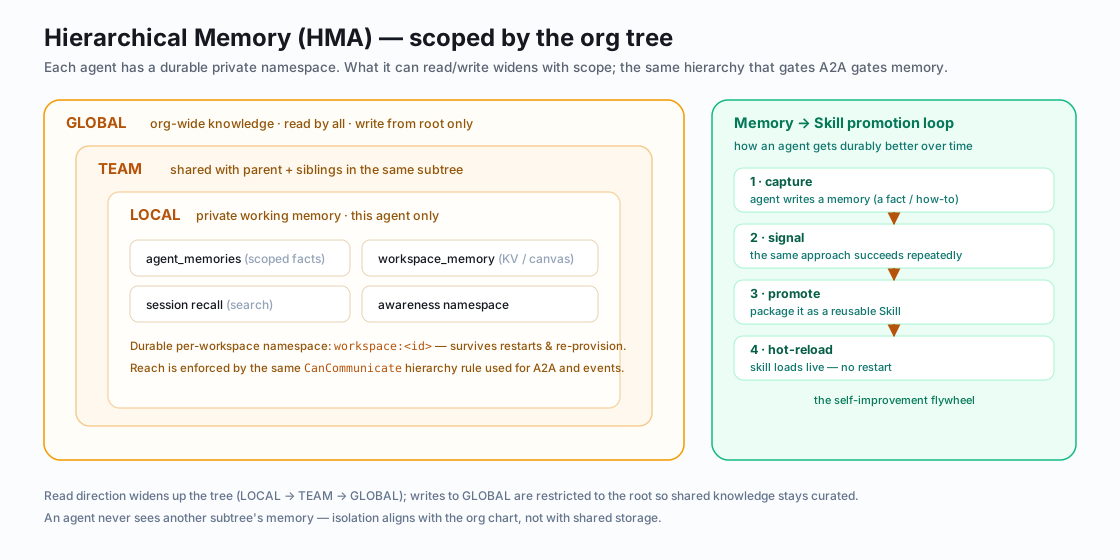
The Three Scopes
| Scope | Meaning | Intended use |
|---|---|---|
LOCAL | visible only to the current workspace | private scratch facts and local recall |
TEAM | visible to the local team boundary | handoffs between a parent and its direct children, or siblings under the same parent |
GLOBAL | readable across the tree; writable only from the root side | org-wide guidance, standards, shared institutional knowledge |
These are the scopes exposed through the runtime memory tools:
commit_memory(content, scope)search_memory(query, scope)
What Exists In The Current Implementation
There are multiple memory surfaces, and the distinction matters.
1. Scoped agent memory (agent_memories)
This is the HMA-facing storage used by:
POST /workspaces/:id/memoriesGET /workspaces/:id/memories- runtime tools
commit_memory/search_memory
It stores durable facts with a LOCAL, TEAM, or GLOBAL scope.
2. Workspace key/value memory (workspace_memory)
This is the simpler key/value surface used by the canvas Memory tab:
GET /workspaces/:id/memoryPOST /workspaces/:id/memoryDELETE /workspaces/:id/memory/:key
It is useful for structured per-workspace state and optional TTL entries. It is not the same thing as scoped HMA memories.
3. Activity recall (session-search)
GET /workspaces/:id/session-search provides a thin recall surface over recent activity rows and memory rows. It is for “what just happened in this workspace?” rather than long-term semantic storage.
4. Awareness-backed persistence
When the runtime receives:
AWARENESS_URL=...
AWARENESS_NAMESPACE=workspace:<id>
the same memory tools keep the same interface, but durable memory writes/reads are routed through the workspace's awareness namespace.
This is the current production direction of the memory boundary: stable tool surface, stronger backend isolation.
Access Model
Molecule AI's memory rules follow the same hierarchy logic as communication rules:
LOCALbelongs to one workspaceTEAMfollows the immediate team boundaryGLOBALis readable widely but writable only from the root side
The platform-side memory handlers still apply reachability checks for shared/team reads instead of trusting callers blindly.
Current Schema Reality
The current agent_memories migration is intentionally simple:
CREATE TABLE IF NOT EXISTS agent_memories (
    id           UUID PRIMARY KEY DEFAULT gen_random_uuid(),
    workspace_id UUID REFERENCES workspaces(id),
    content      TEXT NOT NULL,
    scope        VARCHAR(10) NOT NULL CHECK (scope IN ('LOCAL', 'TEAM', 'GLOBAL')),
    created_at   TIMESTAMPTZ DEFAULT now(),
    updated_at   TIMESTAMPTZ DEFAULT now()
);
pgvector is not enabled by default in the shipped migration. The repo keeps vector support as an optional future extension, not as a current hard dependency. The docs should reflect that explicitly.
Why This Architecture Matters
| Flat shared memory model | Molecule AI HMA |
|---|---|
| easy to over-share | scopes align to hierarchy |
| unclear ownership | each memory belongs to a workspace and a scope |
| recall and procedure blur together | memory stores facts, skills store repeatable procedure |
| hard to govern | org structure and memory rules reinforce each other |
Memory To Skill Promotion
Molecule AI intentionally separates:
- durable fact storage
- repeatable operational procedure
The documented promotion path is:
- a durable workflow is captured in memory
- repeated success becomes a signal
- the workflow is promoted into a skill package
- the runtime hot-reloads that skill
This is why memory and skills are presented as adjacent systems, not one merged blob.
Practical Summary
If you need:
- private agent recall: use
LOCAL - shared team handoff knowledge: use
TEAM - org-wide guidance: use
GLOBAL - simple UI-visible structured state: use
workspace_memory - recent decision/task recall: use
session-search - stronger durable isolation: enable awareness namespaces
Related Docs
Event Log
The append-only structure_events table and the event-sourcing pattern behind workspace state.
Comprehensive Technical Documentation
Definitive technical reference for the Molecule AI platform — split into focused sections covering architecture, lifecycle, communication, memory, extensibility, and operations.